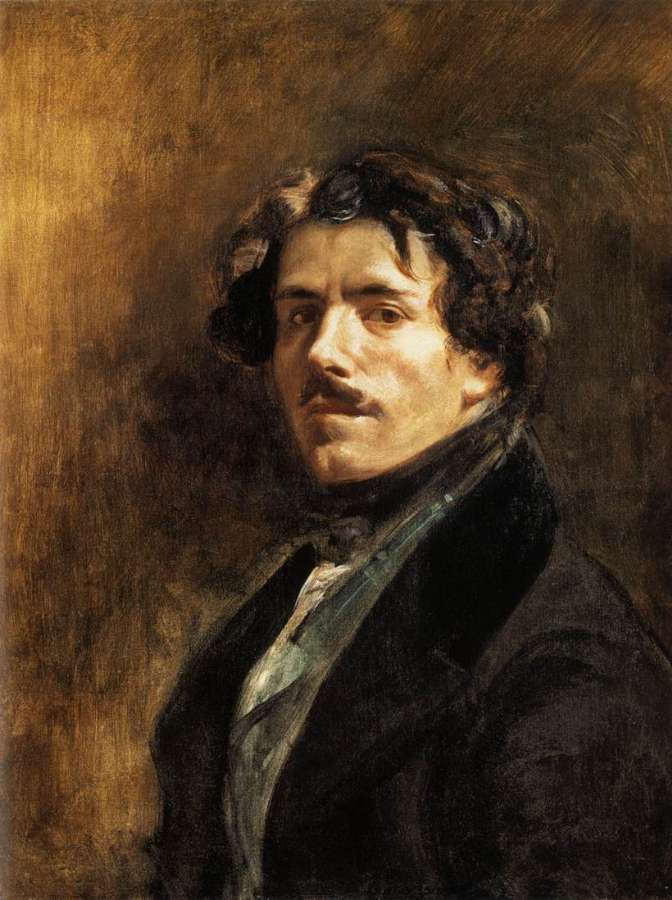
Self Portrait
EUGÈNE DELACROIX
(April 26, 1798 – August 13, 1863)
Ferdinand Victor Eugène Delacroix (April 26, 1798 – August 13, 1863) was the most important of the French Romantic painters. Delacroix's use of expressive brushstrokes and his study of the optical effects of colour profoundly shaped the work of the Impressionists, while his passion for the exotic inspired the artists of the Symbolist movement. A fine lithographer, Delacroix illustrated various works of William Shakespeare, the Scottish writer Sir Walter Scott, and the German writer Johann Wolfgang von Goethe.
In contrast to the Neoclassical perfectionism of his chief rival Ingres, Delacroix took for his inspiration the art of Rubens and painters of the Venetian Renaissance, with an attendant emphasis on color and movement rather than clarity of outline and carefully modeled form. Dramatic and romantic content characterized the central themes of his maturity, and led him not to the classical models of Greek and Roman art, but to travel in North Africa, in search of the exotic. Friend and spiritual heir to Théodore Géricault, Delacroix was also inspired by Byron, with whom he shared a strong identification with the "forces of the sublime", of nature in often violent action.
However, Delacroix was given neither to sentimentality nor bombast, and his Romanticism was that of an individualist. In the words of Baudelaire, "Delacroix was passionately in love with passion, but coldly determined to express passion as clearly as possible."
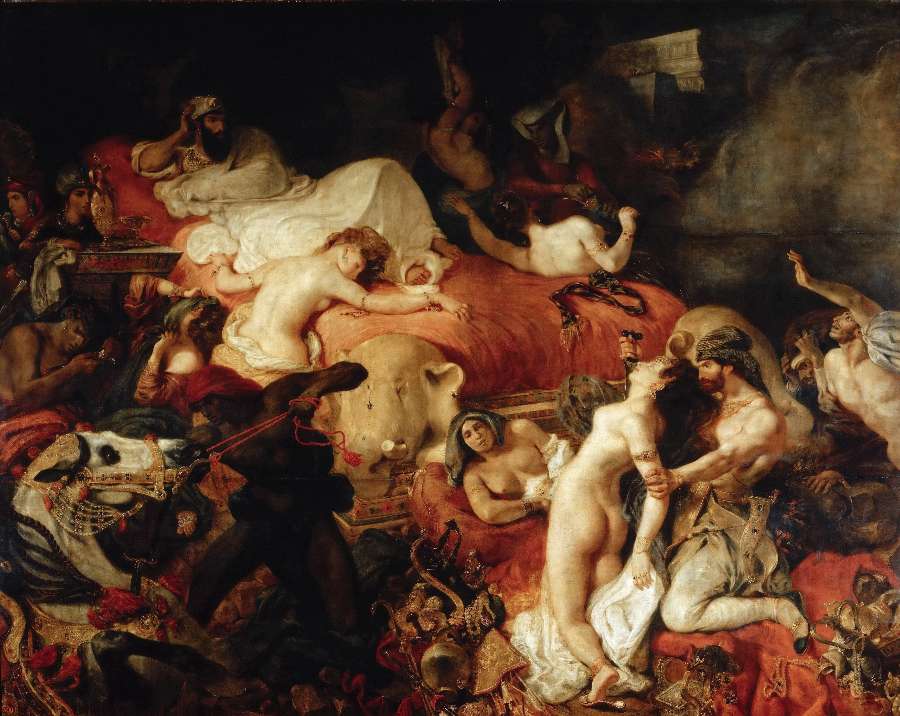
The Death of Sardanapalus
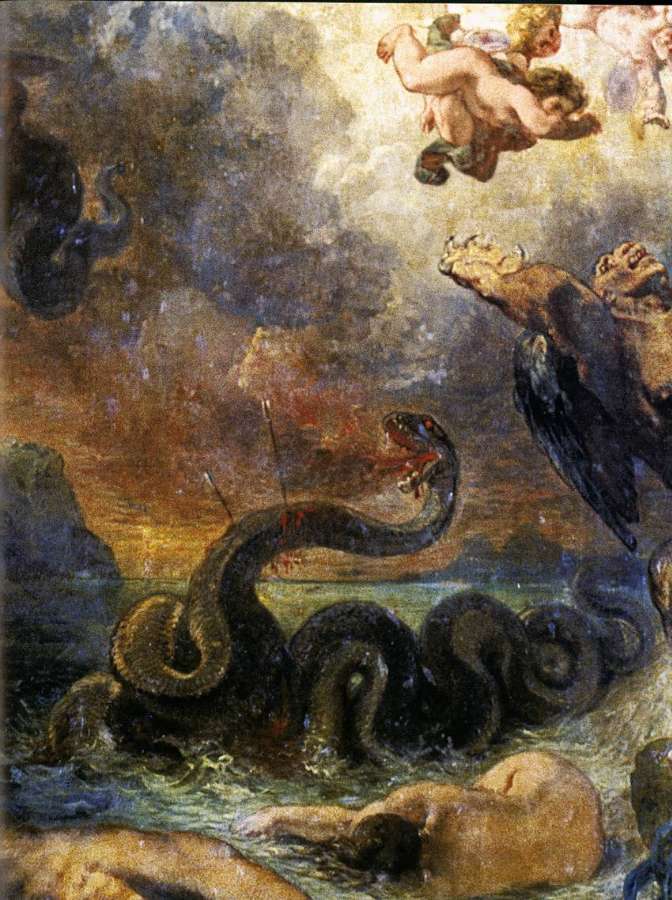
Apollo Slays Python (detail) 1850-51
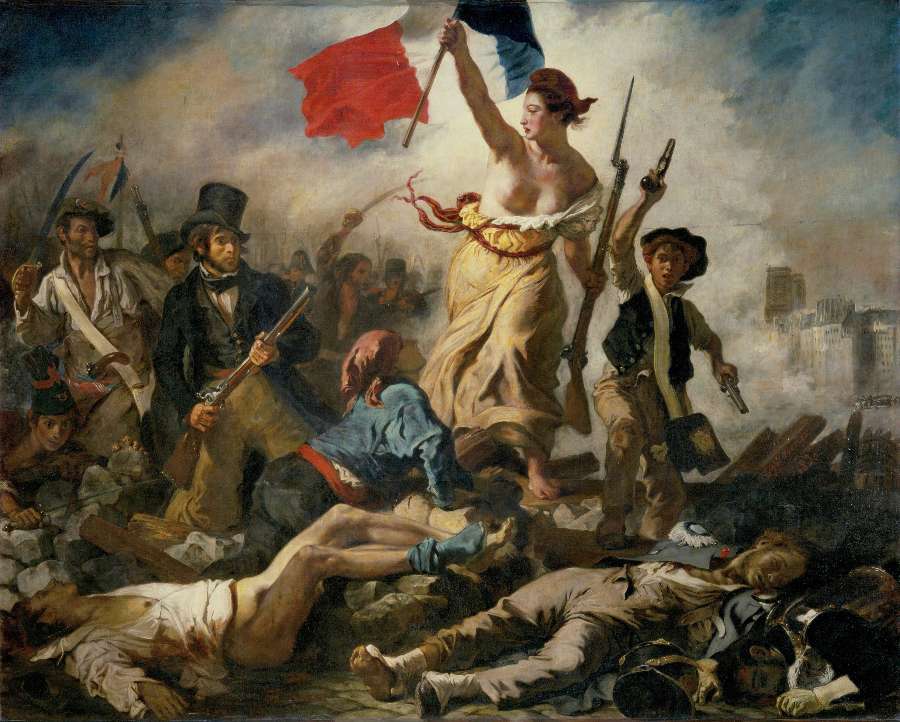
Liberty Leading the People (28th July 1830) 1830
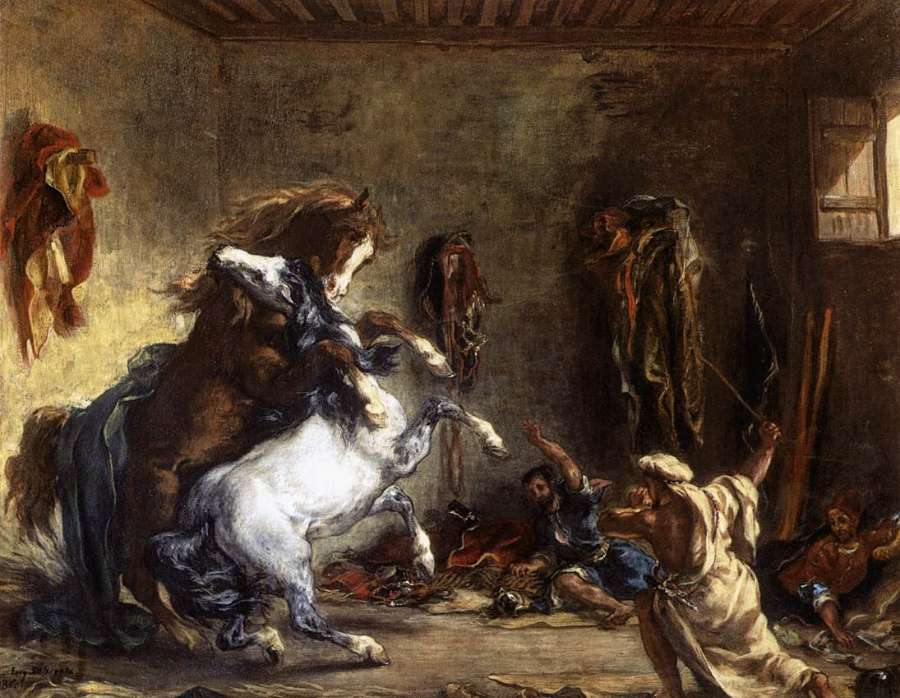
Arab Horses Fighting in a Stable 1860
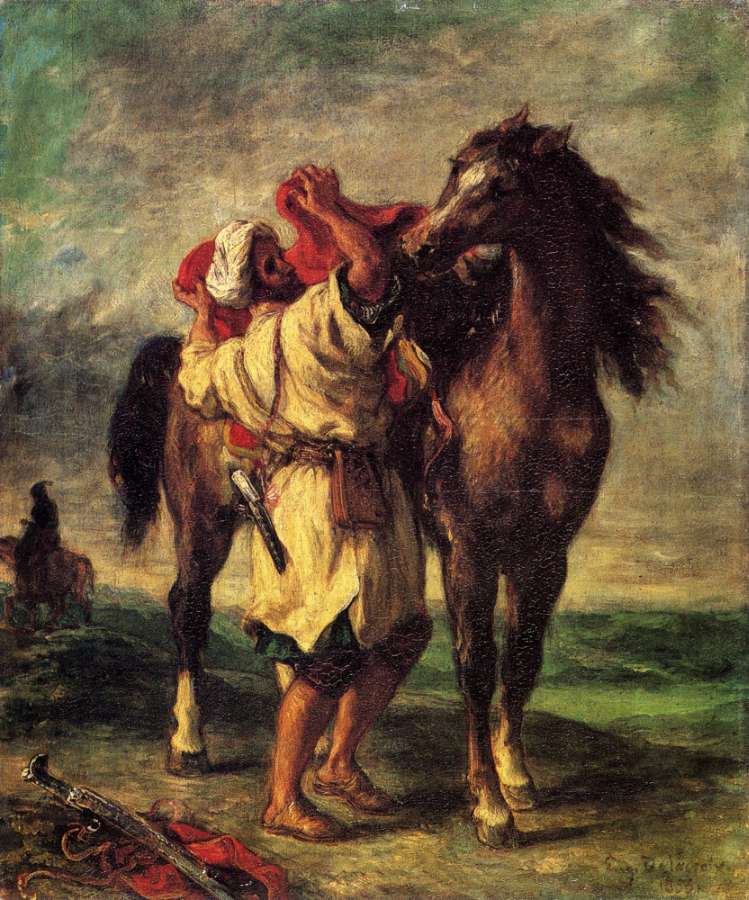
A Moroccan Saddling A Horse
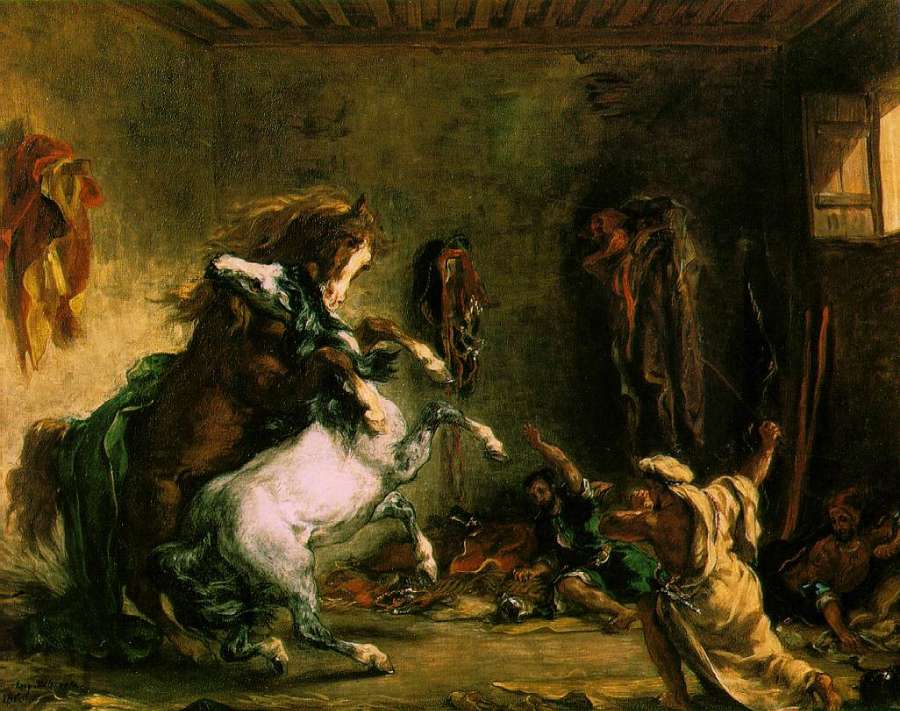
Arabian Horses Fighting in a Stable
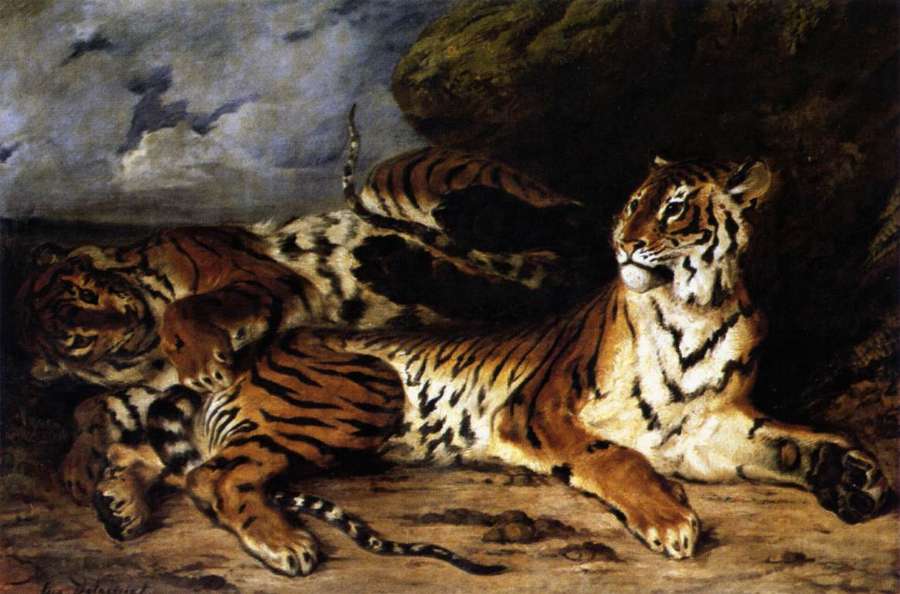
A Young Tiger Playing with its Mother 1830
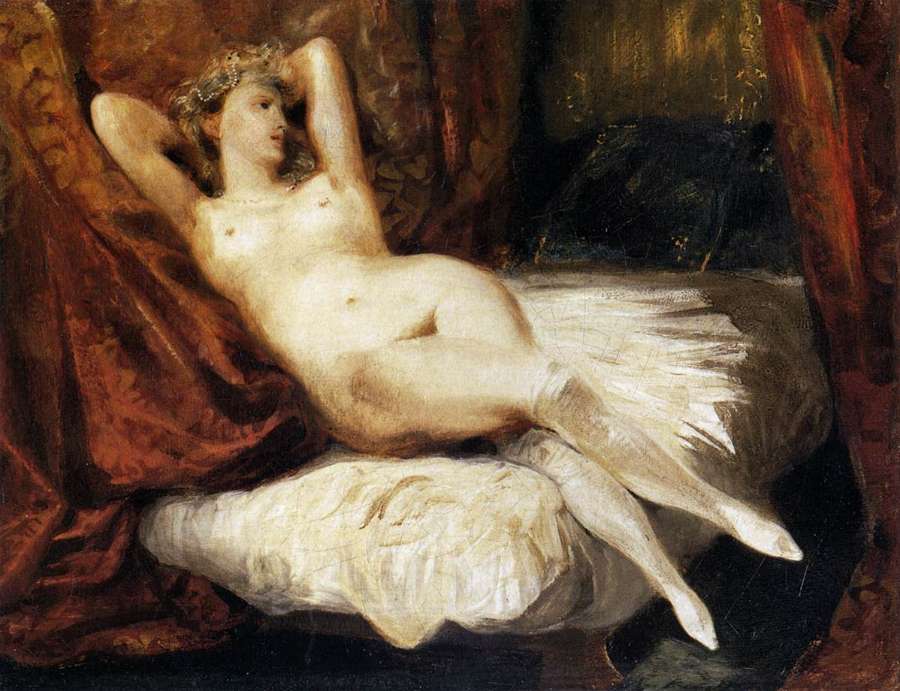
Female Nude Reclining on a Divan 1825-26
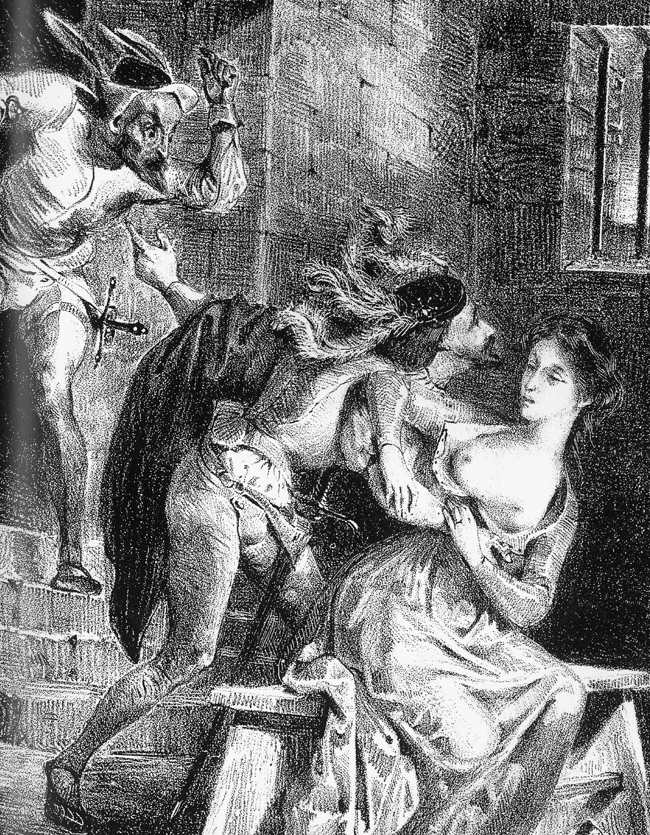
Faust with Margarete in Prison (detail) 1828
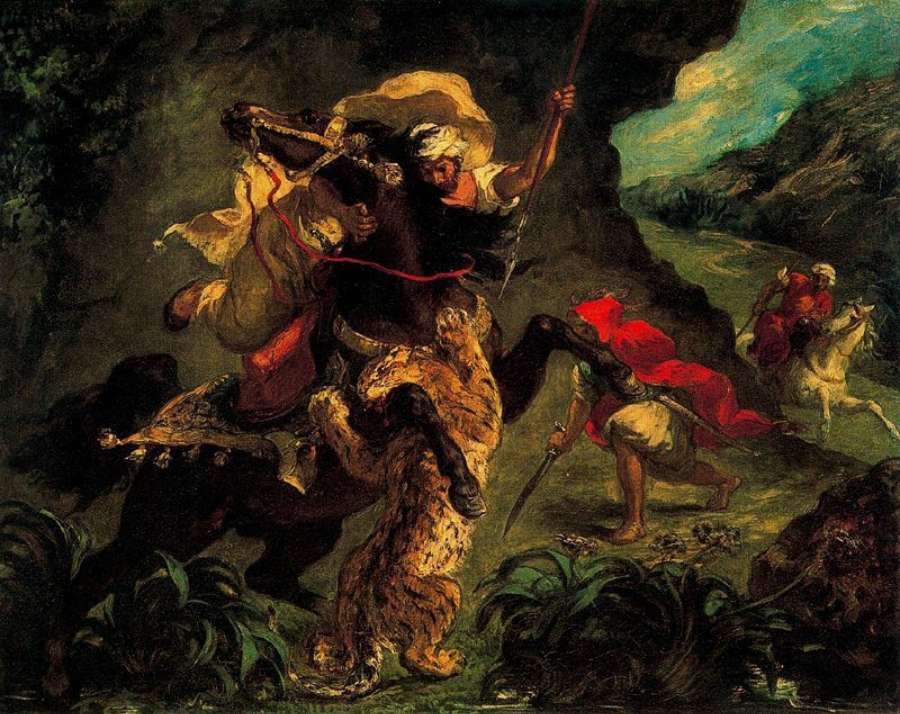
Tiger's hunt
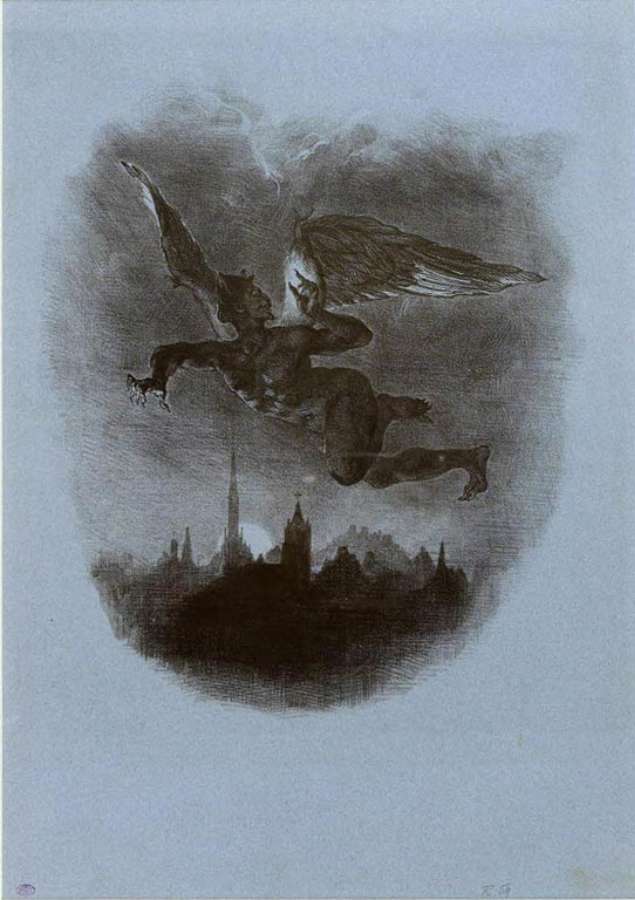
Mephistopheles Over Wittenberg (From Goethe's Faust) 1839
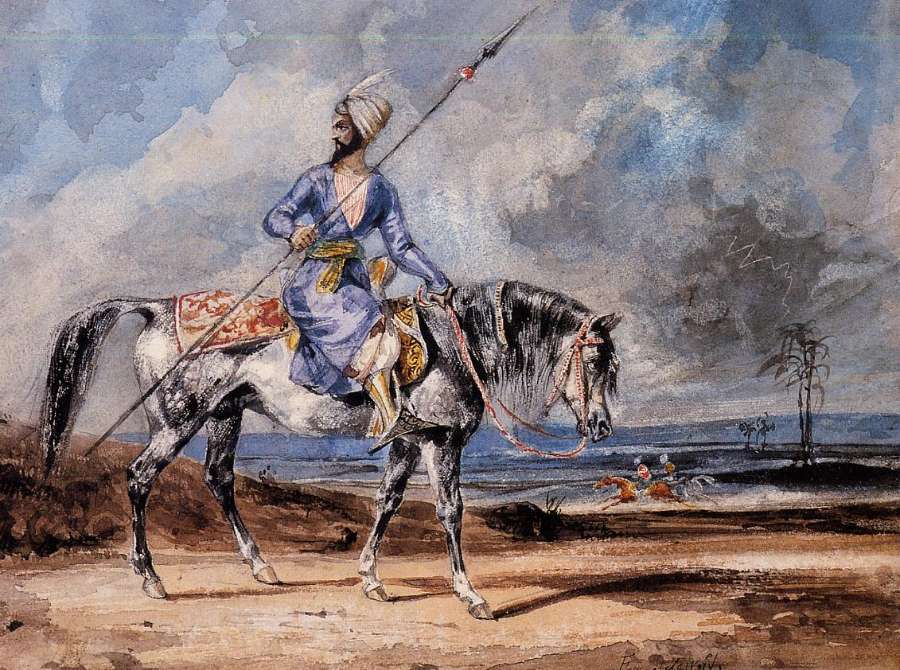
A Turkish Man on a Grey Horse